Cook Lines
Airborne cooking oil and small spills create recurring film around fryers, ranges and grills. Cleaning includes accessible floor areas, equipment edges and nearby grout joints.
Serving Port St. Lucie, Florida & surrounding areas
Open 24/7
Floor Cleaning • Port St. Lucie
Remove built-up grease, dark grout soil and stuck-on food residue with professional cleaning planned around your kitchen's operating schedule.
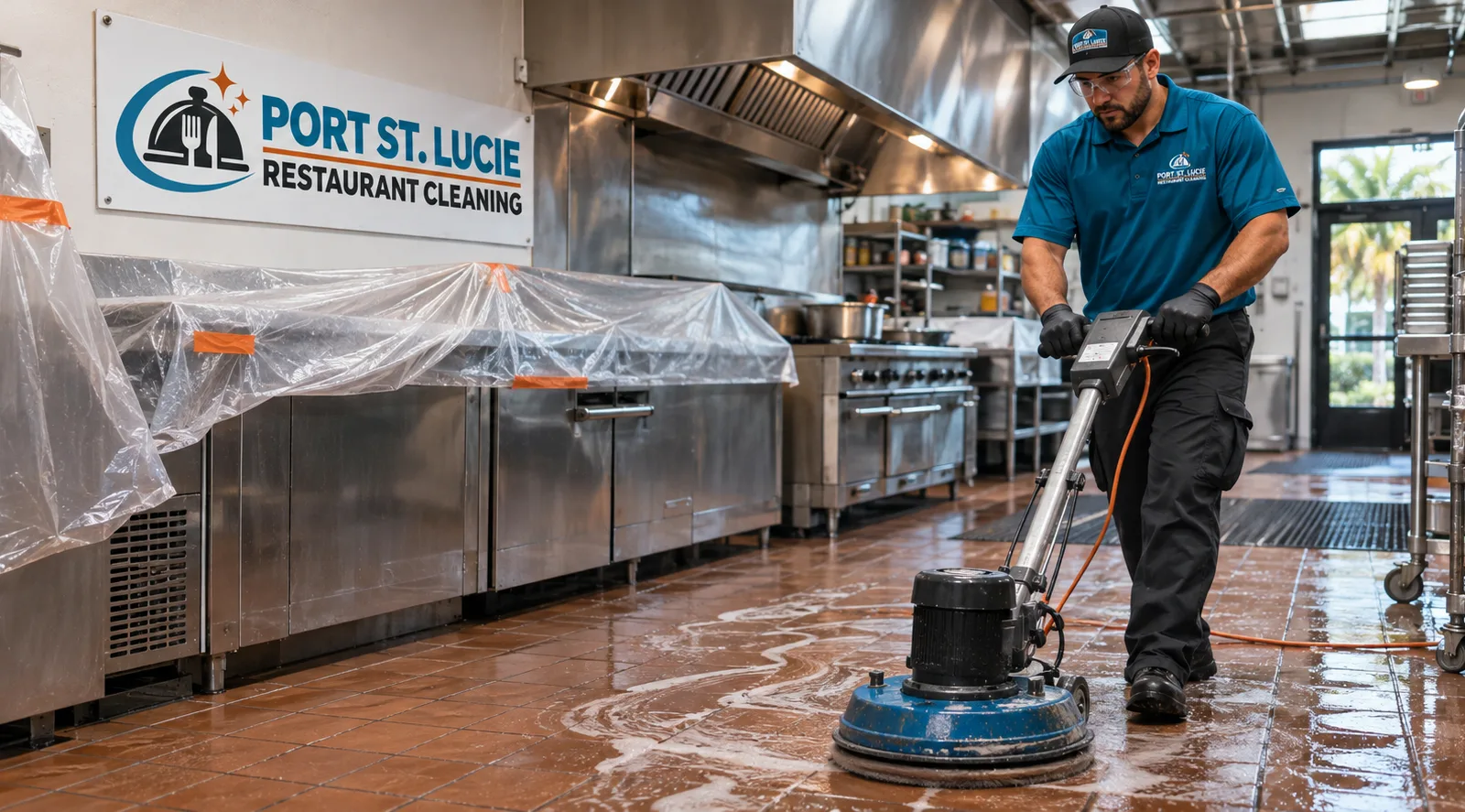
Built for working kitchens
Commercial Kitchen Floor Cleaning targets the grease film and compacted soil that ordinary mopping leaves on tile, grout lines, edges and hard-to-reach areas. A mop can spread oily residue through the room, particularly when the cleaning solution is dirty or the degreaser is not given enough dwell time. Professional service uses the right chemistry, agitation and controlled recovery to lift that material instead of moving it around.
Port St. Lucie Restaurant Cleaning provides floor cleaning services for commercial kitchens that need a deeper reset or scheduled maintenance. Our restaurant specialists serving Port St. Lucie, FL plan the work around access, operating hours, floor condition and the equipment already in the kitchen. The goal is a practical cleaning plan that addresses visible buildup without interfering unnecessarily with food service.
Our office on SW South Macedo Boulevard provides a local base near the Port St. Lucie Boulevard corridor. Commercial kitchens across the city contend with tracked-in sand, food oils and moisture from routine washing. Florida's humid conditions can also slow passive drying, so water recovery and airflow matter when a floor must be ready before staff return.
Tile, joints and perimeter soil
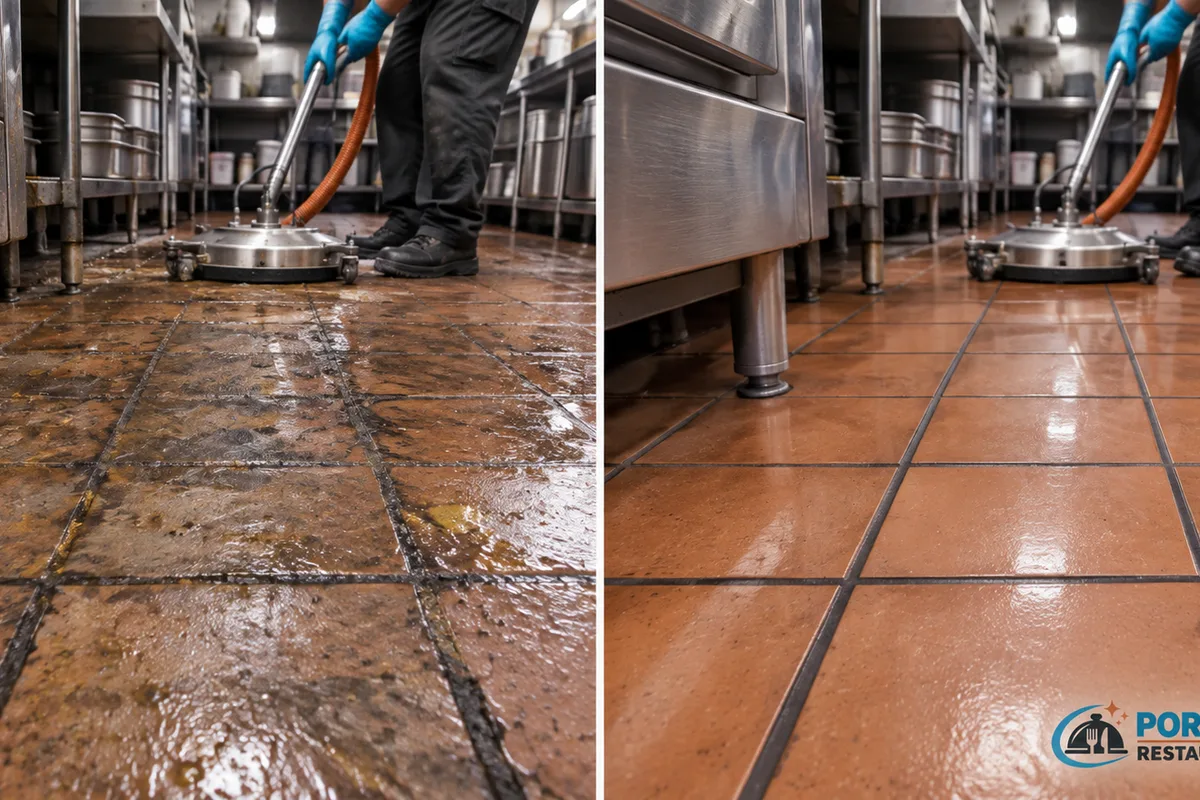
Kitchen tile may look clean across its face while grout lines remain dark. Cement-based grout is porous, and its recessed profile catches oils, proteins, soil and detergent residue. Quarry tile, ceramic tile and porcelain tile have different surface characteristics, but all require attention to joints, transitions and perimeter areas.
Restaurant tile cleaning begins with a floor inspection. The technician identifies the floor material, coating or sealer, loose grout, cracked tiles, low spots and areas where water may collect. Dry debris is removed before a commercial degreaser is applied. Proper dwell time lets the chemistry loosen oily soil. Mechanical agitation then reaches textured tile and grout more consistently than a mop.
After agitation, suspended soil and cleaning solution must be recovered. Thorough rinsing matters because chemical residue can attract new soil and leave the floor tacky. Restaurant grout cleaning may require focused edge work near cook lines, prep stations, walk-in entrances and floor drains. Cleaning can improve the appearance of sound grout, but it cannot repair missing grout, failed joints or broken tile.
Critical floor zones
Airborne cooking oil and small spills create recurring film around fryers, ranges and grills. Cleaning includes accessible floor areas, equipment edges and nearby grout joints.
Food particles, detergent residue and frequent moisture can collect around sinks, prep tables and dish stations. Controlled recovery removes dirty solution rather than leaving it to settle in grout.
Cart traffic and footwear press debris into textured surfaces near walk-in coolers, freezers and dry-storage paths. Mechanical agitation helps release compacted soil.
Base edges, thresholds and spaces beside fixed equipment often receive less attention during daily mopping. Detail work addresses the visible accumulation in these areas.
Soil can transfer between the kitchen, service stations and customer-facing floors. The scope can include connected commercial flooring when the materials and access are suitable.
Residue often gathers where water naturally moves. Cleaning around accessible drain surrounds and low areas helps remove buildup, but drain clearing and floor repair are separate trades.
We confirm the flooring type, soil level, access, drainage and any damaged joints or tiles. We also identify equipment that can be moved safely and items that must remain in place.
Loose debris is removed, movable items are cleared as agreed and sensitive surfaces are protected. The work area is organized to keep cleaning solution away from food, packaging and exposed preparation surfaces.
A compatible cleaning agent is applied at an appropriate dilution. It is allowed to dwell long enough to break the bond between greasy soil and the floor without being left to dry.
Mechanical floor equipment and detail tools work the solution into textured tile, grout joints, corners and perimeter buildup. The method is adjusted for the material and condition of the floor.
Dirty solution is recovered, the floor is rinsed as needed and remaining trouble spots are treated within the agreed scope. Air movement may be used to support drying before the kitchen returns to normal use.
Scheduling and access
A commercial kitchen cannot always stop for an open-ended cleaning visit. Scheduling starts with the operating window, the areas that will be accessible and the time available for setup, cleaning and drying. Service may be arranged after closing, during a planned shutdown or during another agreed low-activity period.
The initial condition affects the plan. A floor with years of accumulated grease may need more agitation, detail work and solution recovery than one maintained on a recurring schedule. Heavy buildup may also hide stained grout, worn sealers, damaged joints or etched surfaces. Those defects can remain visible after the removable soil is gone.
We can discuss one-time deep cleaning or a recurring plan based on cooking volume, floor texture and daily maintenance. Facilities close to major commercial routes may see frequent delivery traffic, while kitchens near I-95 or Florida's Turnpike can receive more tracked-in grit through service entrances. That abrasive debris should be removed before wet cleaning so it is not worked across the floor.
Scope-based pricing
Commercial kitchen floor cleaning in Port St. Lucie typically costs about $300 to $1,200 per visit, while large kitchens or floors with heavy grease buildup may cost more. Small, open tile areas fall toward the lower end; detailed cook lines and extensive grout work raise labor time.
Final pricing depends on square footage, floor material, grease level, equipment access, required scheduling and whether repeated treatment is needed. A site review also identifies damaged grout or tile that cleaning cannot correct. The exact cost is confirmed after the floor and work conditions are assessed.
Preparation and expectations
A useful proposal should state which rooms and floor areas are included, how fixed equipment affects access, and whether edge detailing or intensive grout work is part of the job. It should also account for the kitchen's shutdown window and drying requirements. These details make it easier to compare commercial floor cleaning in Port St. Lucie on the actual scope rather than on a single price.
Before service, food and exposed utensils should be secured according to the facility's procedures. Staff should identify sensitive equipment, known leaks, loose tiles and areas that must remain accessible. If furniture or portable equipment must be moved, responsibilities should be agreed in advance. We do not promise that cleaning will restore damaged flooring to a new appearance. We do explain what soil appears removable and what may be permanent staining, wear or material failure.
Ongoing daily care affects how long a deep cleaning remains visible. Use clean mop water, change it when soiled, measure chemicals according to their labels and remove dry debris before wet mopping. Too much detergent can leave residue. Grease deposits around cooking equipment should be addressed promptly rather than spread into traffic lanes.
Describe your floor material, kitchen size, grease buildup and preferred service window to receive a scope based on the conditions in your facility.
Call for a Free QuoteCommon questions
Many restaurant floor cleaning visits take several hours, but the actual duration depends on square footage, grease buildup, equipment access and the amount of grout detailing required. Setup, solution dwell time, agitation, recovery and drying all need to fit the operating window. A Port St. Lucie kitchen with a compact open layout will generally require less time than a large cook line with fixed equipment and narrow access.
Restaurant floor degreasing removes oily soil, but it cannot remove every stain or correct physical damage. Discolored grout may be permanently stained, and tile can remain marked by wear, etching or failed coatings. An inspection separates removable buildup from conditions that may require regrouting, sealing or flooring repair.
The right frequency depends on cooking volume, menu, floor texture and the quality of daily maintenance. Frying operations and heavily textured quarry tile often need more frequent attention than lightly used prep spaces. A recurring interval should be set after the first cleaning reveals how quickly grease returns under the kitchen's normal Port St. Lucie operating conditions.
Accessible flooring around fryers and fixed equipment can usually be cleaned without disconnecting or moving installed appliances. The agreed scope should identify safe access, utility lines and areas blocked by equipment. Appliance disconnection, gas work and moving heavy fixed units require qualified personnel and are not treated as routine floor-cleaning tasks.
The work can be scheduled around a planned reopening time, provided the scope allows enough time for cleaning, recovery and drying. Humid Florida conditions, low spots and porous grout can extend drying. Fans and careful water recovery help, but the facility should keep foot traffic off damp flooring until it is ready for use.
Grout cleaning and grout sealing are separate steps, so sealing should be specifically included in the written scope if requested. The grout must be suitable, clean and adequately dry before a compatible sealer is applied. Missing grout, cracked joints and areas exposed to constant grease may need repair or a different maintenance approach.
Secure food, utensils and packaging, then remove portable items from the agreed work area when practical. Tell the cleaning team about loose tiles, leaking equipment, damaged grout and any access restrictions. Kitchens near busy Port St. Lucie commercial corridors should also plan delivery timing so vendors do not cross wet work areas.
Start with a defined scope
Tell Port St. Lucie Restaurant Cleaning about the flooring, problem areas and operating schedule. We will discuss access, expected results and a practical scope before work begins.