Restaurant Cleaning • Jensen Beach

Restaurant Cleaning in Jensen Beach

Detailed commercial kitchen cleaning built around your equipment, operating hours, food-safety procedures, and inspection readiness.

✓Written scopes ✓Equipment care ✓Food-safe methods ✓After-hours planning
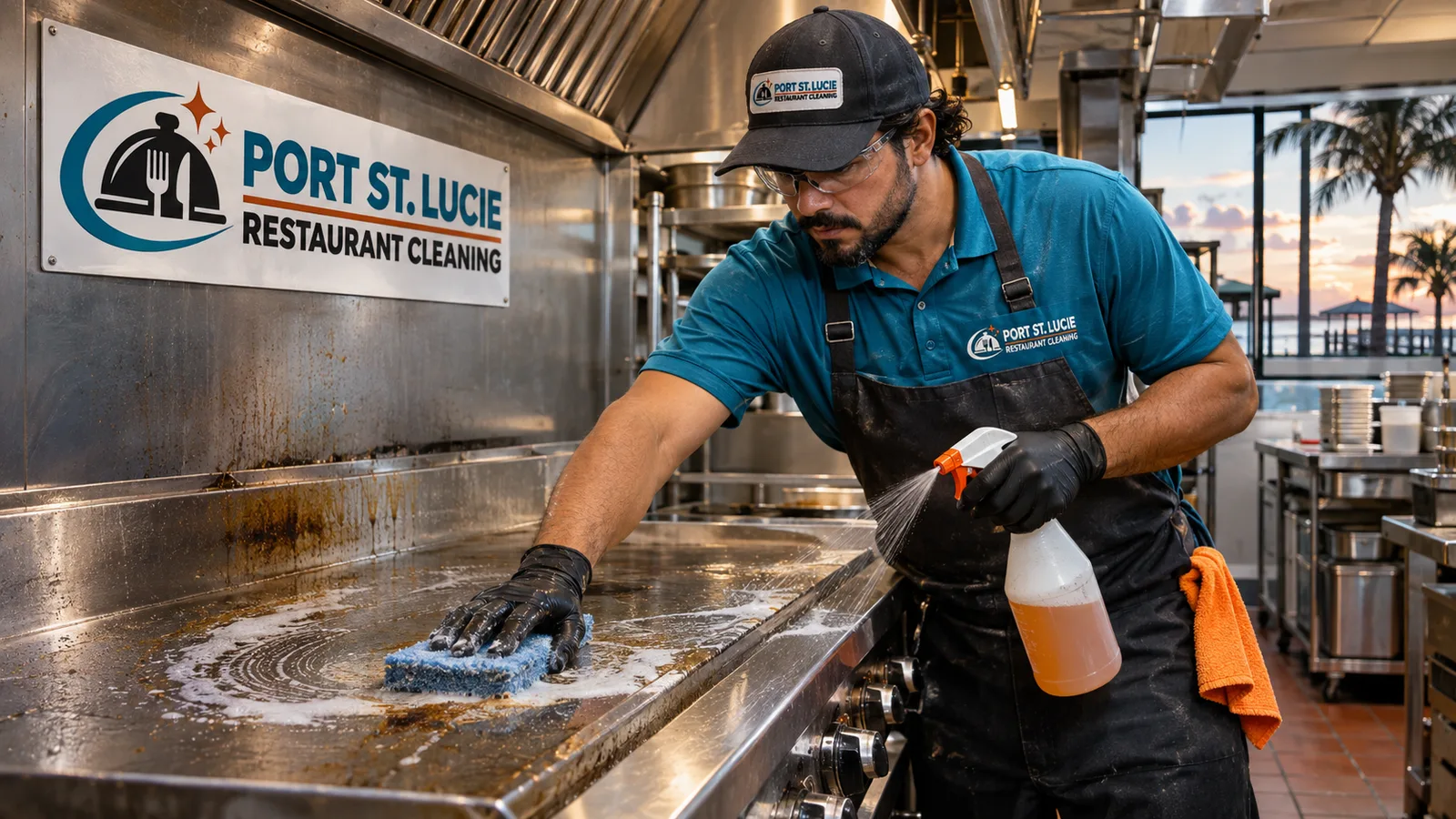
A trained restaurant cleaner degreasing stainless-steel cooking equipment in a Jensen Beach commercial kitchen after service

Built around your operation

Restaurant Cleaning Jensen Beach Operators Can Schedule Around Service

Restaurant Cleaning Jensen Beach businesses rely on should fit the way a working kitchen operates. Port St. Lucie Restaurant Cleaning develops written scopes for restaurants, cafés, bars, bakeries, and other food-service operations. The work can cover guest-facing areas, food-preparation zones, cook lines, dish areas, floors, walls, and accessible equipment surfaces. Each scope identifies what will be cleaned, how often it will be handled, and which tasks remain with the restaurant's staff or specialist vendors.

Our restaurant crew serving Port St. Lucie also works with operators in Jensen Beach, planning access from our base on SW South Macedo Boulevard. That proximity helps us coordinate recurring work without treating every kitchen as if it has the same layout or closing routine. Before service begins, we discuss operating hours, access procedures, alarm instructions, food and utensil storage, sensitive surfaces, and the condition of high-soil areas.

Jensen Beach restaurants contend with Florida humidity, tracked-in sand, frequent rain, and busy seasonal periods. Moisture and foot traffic can leave entry floors, mats, grout lines, and restrooms needing more attention. Kitchens create their own cleaning demands through airborne grease, food debris, carbon deposits, and residue around equipment legs and casters. A practical plan addresses both sides of the operation without interrupting opening prep or exposing food-contact items to the wrong chemical.

Request a Callback

Detailed equipment care

Restaurant Equipment Cleaning in Jensen Beach

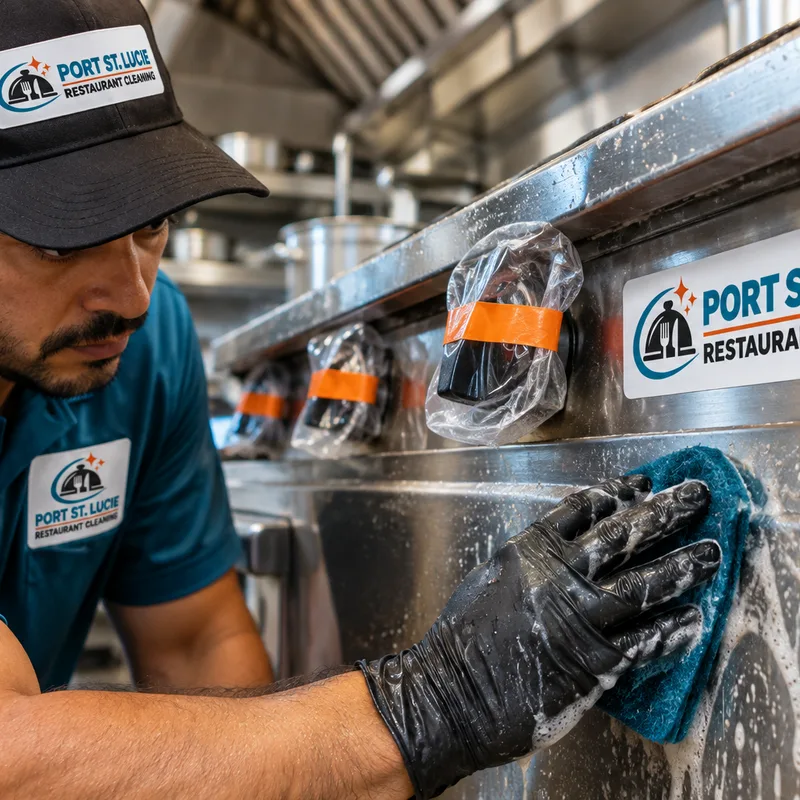
Close view of a restaurant cleaner using a nonabrasive pad on a stainless-steel range exterior, with controls protected and nearby food items removed

Restaurant Equipment Cleaning Jensen Beach kitchens need is more involved than wiping the visible stainless steel. Grease and crumbs collect under range edges, behind movable equipment, around casters, on splash surfaces, and along the sides of fryers and prep units. These areas can attract pests, create odors, make floors slippery, and shorten the useful life of finishes or components when residue is left in place.

The cleaning method depends on the equipment and the manufacturer's care instructions. Stainless-steel exteriors are cleaned with the grain to limit scratching. Painted panels, plastics, rubber gaskets, aluminum parts, control markings, and electrical areas require compatible products and controlled moisture. Detachable parts may be removed for washing only when the agreed scope and safe handling procedure allow it. Equipment must be cool, stable, and isolated as appropriate before detailed work begins.

A routine equipment scope may include accessible exteriors of ranges, ovens, fryers, griddles, refrigerators, freezers, prep tables, shelving, sinks, and dishwashing equipment. It can also include the floor and wall surfaces exposed when approved movable units are pulled out. Internal mechanical repair, refrigerant work, electrical service, and fire-suppression work require qualified specialists and are kept separate from cleaning.

Request a Callback

Area-by-area scope

A Scope Built for the Whole Restaurant

Cook Line and Preparation Areas

Degreasing targets accessible equipment exteriors, backsplashes, prep tables, shelving, sinks, washable walls, and floors. Products and dwell times are chosen for the soil and surface rather than applying one chemical throughout the kitchen.

Dining and Guest Areas

Tables, chairs, booths, ledges, doors, glass, floors, and other touchpoints can be included. Cleaning is timed so surfaces have time to dry and the dining room is ready before staff or guests arrive.

Dish Areas and Storage Zones

Dish rooms often need attention around machine exteriors, sinks, drain-adjacent floors, wall splatter, and shelving. Storage work is coordinated carefully so ingredients, packaging, utensils, and clean wares remain protected.

Restrooms and Entrances

Restroom fixtures, partitions, touchpoints, floors, mirrors, entry glass, and walk-off areas can be placed on a recurring checklist. Rain and tracked-in sand may justify more frequent floor care near Jensen Beach entrances.

Periodic Detail Work

Baseboards, grout lines, wall buildup, high ledges, floor edges, and spaces beneath approved movable equipment may be rotated into periodic service. This keeps the regular visit manageable while preventing neglected areas from accumulating heavy soil.

Documentation and Verification

A written checklist gives managers a clear way to confirm completion and report concerns. Site-specific notes can identify restricted equipment, chemical limitations, access requirements, and tasks that need manager approval.

Request a Callback

Controlled service sequence

How We Set Up a Reliable Cleaning Program

Request a Callback
01

Walk Through the Restaurant

We review the kitchen, dining room, restrooms, entrances, storage areas, and any accessible equipment included in the request. The walkthrough also identifies floor materials, sensitive finishes, heavy grease, tight clearances, and units that cannot be moved safely.

02

Define Responsibilities

The written scope lists tasks, frequencies, exclusions, access arrangements, and preparation expected from restaurant staff. It also distinguishes routine cleaning from specialized hood, duct, grease-trap, pest-control, repair, and fire-system work.

03

Plan Around Operating Hours

Service is scheduled around closing, opening prep, deliveries, and staff access. Food, utensils, smallwares, and exposed ingredients must be removed or protected before chemical cleaning begins.

04

Clean in a Controlled Order

The crew works from cleaner zones toward heavier soil and uses separate tools where cross-contamination is a concern. Chemicals receive the required label-directed contact time, and food-contact surfaces are rinsed or treated as the product label requires.

05

Review and Adjust

Completed work is checked against the scope. If operating hours, menu production, equipment placement, or soil levels change, the checklist and service frequency can be adjusted rather than allowing gaps to persist.

Surface-aware practices

Food-Safe Methods and Clear Boundaries

Cleaning removes grease, food residue, and other soil. Sanitizing is a separate step used on a previously cleaned surface to reduce microorganisms according to the product label and the restaurant's food-safety plan. Using those terms correctly matters. Applying sanitizer to a greasy surface does not replace cleaning, and stronger chemical concentration is not automatically better.

Products must be suitable for the surface and intended use. Label directions govern dilution, personal protective equipment, contact time, rinsing, storage, and whether a product may be used on a food-contact surface. Safety Data Sheets should remain available to the workplace. Color-coded cloths, pads, mop heads, or buckets can help keep restroom tools away from food-preparation areas.

Restaurant cleaning also has limits. Commercial cooking exhaust hoods, ducts, fans, fire-suppression components, grease interceptors, pest treatment, and internal equipment repairs may require separate vendors, credentials, or service procedures. Those tasks should not be represented as ordinary janitorial work. Port St. Lucie Restaurant Cleaning identifies such boundaries in the scope so managers know who is responsible for each item.

For operations in Jensen Beach, applicable food-service oversight can depend on the type of establishment. Restaurants are generally regulated through Florida's Division of Hotels and Restaurants, while certain food operations fall under other authorities. Cleaning supports a facility's sanitation program, but the operator remains responsible for its permits, food handling, temperature controls, employee practices, and compliance obligations.
Request a Callback

Scheduling by actual use

Choosing the Right Frequency

After-hours restaurant cleaning near Jensen Beach, with a worker using a commercial floor scrubber in an empty dining area while another cleans the service counter

Cleaning frequency should follow actual use, soil load, menu, equipment, and hours rather than a generic calendar. A high-volume fry operation may need frequent cook-line degreasing, while a beverage-focused business may place more attention on floors, restrooms, counters, and glass. Recurring service can be arranged for selected tasks, with deeper detail work placed on a rotating schedule.

Daily staff duties and professional cleaning should support each other. Restaurant employees commonly handle spills, food-contact surfaces, utensils, and sanitation tasks during service. A cleaning crew can take responsibility for the agreed after-hours workload, including floor scrubbing, buildup removal, restroom cleaning, dining-room work, and detailed accessible equipment care. The division of labor should be written down.

Jensen Beach includes waterfront dining around the Indian River Lagoon and ocean-access areas, along with restaurants serving residents and shoppers near Jensen Beach Boulevard. The operating patterns differ. Late closings, outdoor seating, wet entrances, sand, seafood preparation, and seasonal demand can all change the practical workload. A walkthrough is the best way to set frequencies that match the facility instead of overcleaning low-use areas while missing the problem zones.

Request a Callback

Scope-based pricing

How Much Does Restaurant Cleaning Cost in Jensen Beach?

Recurring restaurant cleaning in Jensen Beach typically costs about $0.15 to $0.40 per square foot per visit, while small after-hours visits may carry minimum charges around $175 to $350. Detailed kitchen or equipment work can run about $50 to $100 per labor hour, depending on buildup and access. Final pricing changes with square footage, service frequency, grease levels, floor type, equipment movement, restroom count, operating hours, and required detail work. The exact cost is confirmed after a walkthrough and written scope.

Request a Callback

A walkthrough can turn an uneven cleaning routine into a clear checklist with defined frequencies, equipment boundaries, and service times that fit your restaurant.

Call for a Free Quote

Common questions

Questions Jensen Beach Restaurant Operators Ask

Can restaurant cleaning be completed after closing?

Yes, after-hours cleaning can be planned around closing and opening prep when access, alarm procedures, and lockup responsibilities are agreed in advance. Jensen Beach restaurants with late service or early deliveries may need a narrower working window, so the walkthrough includes realistic start and completion times.

What affects the price of Restaurant Cleaning Jensen Beach businesses receive?

Square footage, visit frequency, grease buildup, floor materials, equipment access, restroom count, and the amount of detail work drive the price. A dining room with light routine soil is different from a cook line that needs heavy degreasing and cleaning beneath approved movable units. A site visit allows those conditions to be priced in a written scope.

Do you clean fryers, ovens, ranges, and refrigeration equipment?

Accessible exterior surfaces and approved removable components can be included when the equipment is cool, safely isolated, and suitable for the planned method. Restaurant Equipment Cleaning in Jensen Beach does not automatically include internal electrical parts, refrigeration systems, gas components, repairs, hood ducts, or fire-suppression equipment. Those items may require qualified specialist service.

Does professional cleaning guarantee a restaurant will pass an inspection?

No, a cleaning service cannot guarantee an inspection result because compliance also covers food storage, temperatures, employee hygiene, pest control, equipment condition, records, and operating practices. A documented cleaning scope can help address sanitation conditions, but the restaurant operator retains responsibility for regulatory compliance.

How often should a commercial kitchen receive detailed cleaning?

The right schedule depends on production volume, menu, grease output, staffing, and equipment layout. High-use cook lines may need frequent degreasing, while floor edges, walls, shelving, and spaces beneath movable equipment can follow a rotating detail schedule. Florida humidity and rain can also justify closer attention to entrances, mats, and restroom floors.

Do restaurant employees need to prepare the kitchen before the crew arrives?

Yes, staff generally need to secure food, utensils, smallwares, personal items, and sensitive ingredients before cleaning starts. Hot equipment must have adequate cooling time, and the manager should identify units that cannot be moved or exposed to moisture. These preparation duties are recorded during setup.

Can a one-time deep clean become recurring service?

Yes, a one-time cleaning can establish a baseline before a recurring checklist begins. Heavy buildup may require more labor during the first visit, after which selected tasks can be assigned weekly, at another agreed interval, or on a rotating schedule based on use.

Start with a defined scope

Build a Cleaning Plan Around Your Restaurant

Tell Port St. Lucie Restaurant Cleaning about your Jensen Beach facility, operating hours, equipment, and problem areas. We will discuss the scope and arrange the next step toward clear, dependable service.