Restaurant Deep Cleaning • Port St. Lucie

Restaurant Cleaning Company

Detailed cleaning for commercial kitchens, walk-in coolers, dining areas, and hard-to-reach surfaces, planned around your operating schedule.

✓Written scope ✓Kitchen deep cleaning ✓Walk-in cooler cleaning ✓High dusting
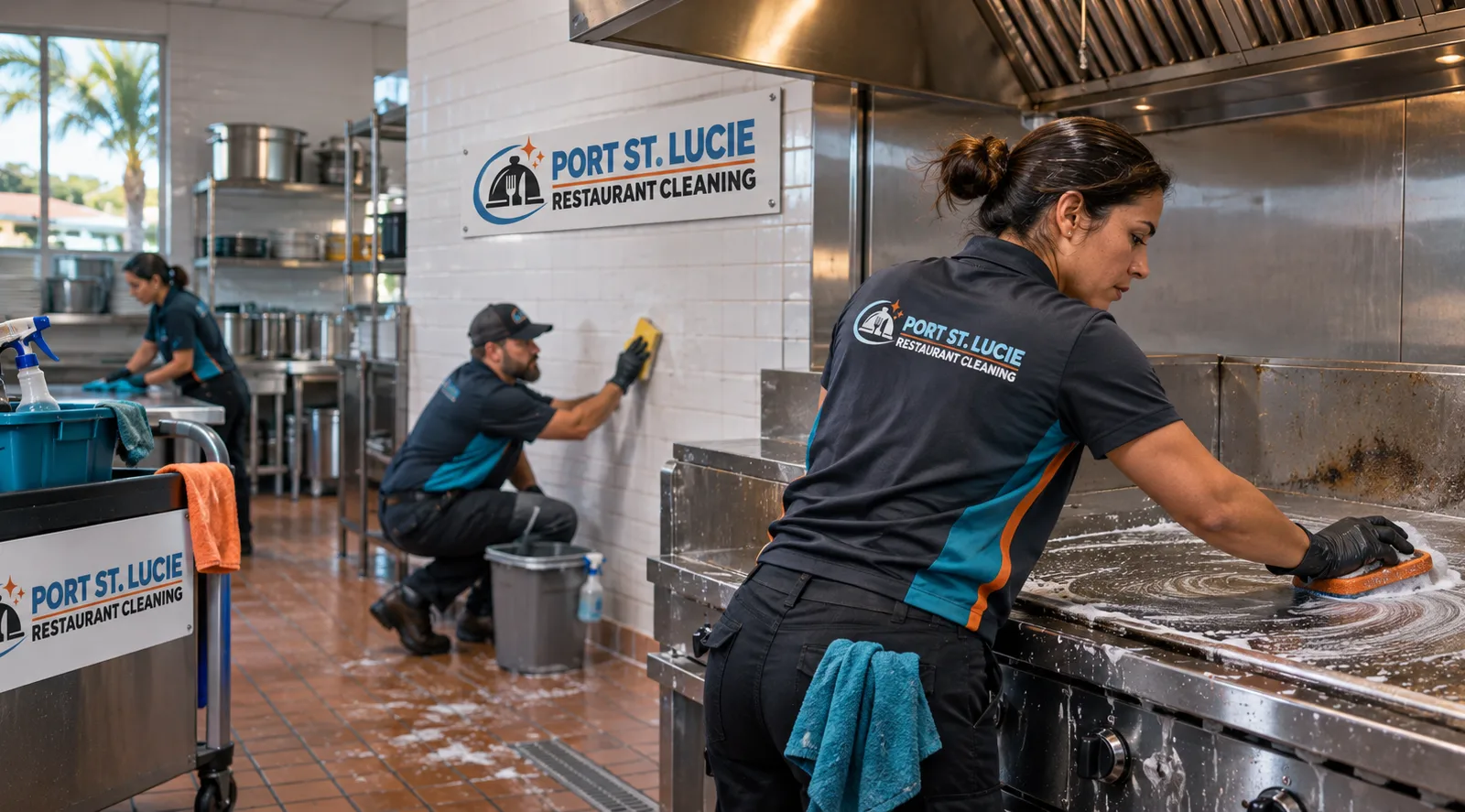
A restaurant cleaning crew deep cleaning stainless steel cooking equipment and tiled surfaces in a commercial kitchen

Detailed work beyond closing duties

Restaurant Deep Cleaning in Port St. Lucie

A busy restaurant needs more than routine wiping, sweeping, and mopping. Port St. Lucie Restaurant Cleaning tackles the grease films, food residue, dust, and buildup that regular closing work may leave behind. Our Restaurant Cleaning Company prepares a written scope based on the rooms, equipment, surface materials, access limits, and condition of the property.

Working with managers, Port St. Lucie's trusted restaurant team coordinates detailed work so they know what will be cleaned, what must be moved or shut down, and when each area can return to use. That planning matters in kitchens where hot equipment, cold storage, food-contact surfaces, and active prep areas require different methods. We can schedule a one-time deep clean, address a problem area, or create a recurring detailed-cleaning plan.

Florida's warm, humid climate makes moisture control especially relevant around cooler doors, gaskets, floor edges, drains, and other confined spaces. Coastal air can also leave exterior-adjacent surfaces and vents needing closer attention. We select products and procedures for the surface at hand rather than treating stainless steel, sealed flooring, painted walls, and refrigeration components alike.

Request a Callback

Included work and critical surfaces

Restaurant Deep Cleaning Services

Kitchen Deep Cleaning

Detailed cleaning addresses grease and residue on accessible equipment exteriors, stainless steel, walls, backsplashes, floors, base edges, and other agreed kitchen surfaces. The scope identifies what can be cleaned in place and what requires shutdown, cooling, or removal.

Walk-In Cooler Cleaning

Walk In Cooler Cleaning can cover shelving, walls, doors, handles, gaskets, and floors after food and movable inventory are cleared. Crews use controlled moisture around refrigeration components and keep chemicals away from exposed food.

High Dusting

High Dusting in Port St. Lucie targets accessible rafters, ledges, vents, pipes, light housings, and other overhead surfaces. The crew plans containment and works from high areas downward so settled debris is collected during the final floor cleaning.

Dining and Service Areas

Restaurant detailed cleaning may include tables, chairs, booths, partitions, counters, baseboards, doors, and floor edges. Cleaning methods are matched to upholstery, finished wood, laminate, metal, and other materials.

Restrooms and Employee Areas

The agreed scope can cover fixtures, partitions, dispensers, mirrors, touchpoints, lockers, break areas, and floors. Mineral film, soap residue, and buildup receive focused attention where the surface condition allows.

Targeted Problem Areas

A manager can prioritize a cook line, cooler, storage room, prep space, or overhead zone instead of booking the entire property. This is useful before an inspection, after equipment work, or when one area has fallen behind.
Request a Callback

Equipment-aware cleaning

Commercial Kitchen Deep Cleaning in Port St. Lucie

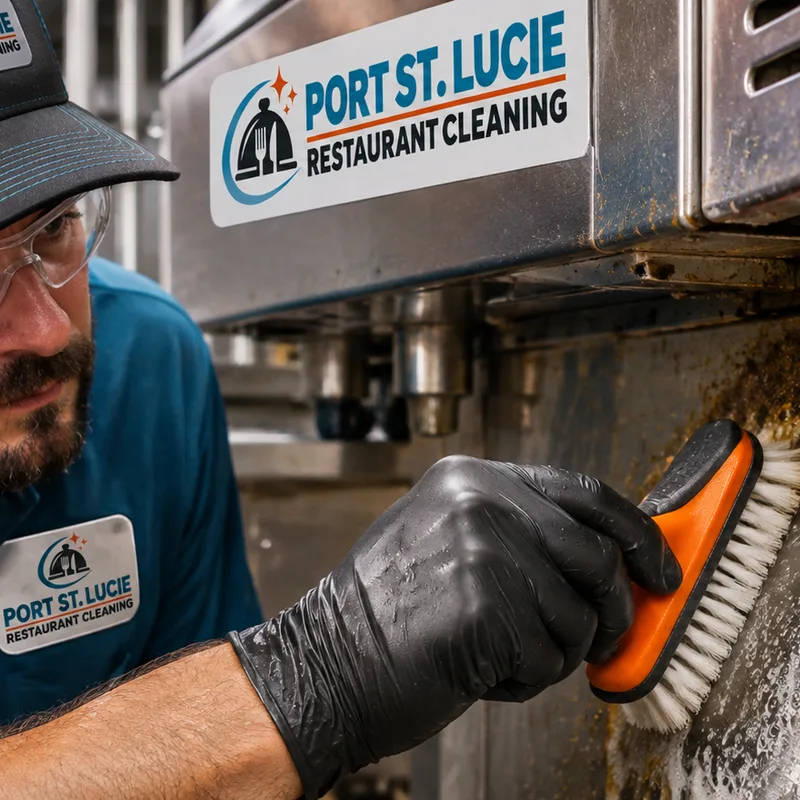
Close view of a technician removing grease from stainless steel surfaces behind cooled commercial cooking equipment using surface-safe tools

Commercial Kitchen Deep Cleaning in Port St. Lucie starts with a practical distinction: cleaning equipment is different from servicing it. Restaurant deep cleaners can remove accessible soil from approved surfaces, but they should not disassemble gas, electrical, fire-suppression, or refrigeration systems unless separately qualified to do so. The scope should state whether appliances will be moved and who is responsible for disconnecting them.

Before work begins, cooking equipment must be cool and safe to approach. Food, utensils, packaging, and smallwares are removed from the work zone or protected as agreed. Heavy grease may require dwell time, agitation, scraping with surface-safe tools, and repeated recovery. Food-contact surfaces are then rinsed and sanitized with a product used according to its label, including the required concentration and contact time.

Specialized exhaust hood, duct, and fan cleaning is a separate fire-safety service with its own access and documentation requirements. If that work is needed, it should be identified during the walkthrough rather than assumed to be part of general kitchen cleaning.

Request a Callback

Controlled cleaning sequence

How Professional Restaurant Deep Cleaning Works

Request a Callback
01

Walkthrough and priorities

A manager identifies the spaces, equipment, sensitive materials, access points, and problem buildup. The walkthrough also establishes operating hours, alarm or key procedures, and any areas that must remain available.

02

Written scope and preparation plan

The scope lists included surfaces, exclusions, preparation duties, and the planned work window. It also identifies whether food, shelving, floor mats, small equipment, or inventory must be removed before the crew arrives.

03

Safety and area setup

The crew confirms that relevant equipment is off and cool, places wet-floor controls, protects adjacent areas, and prepares tools and products. Safety Data Sheets can be kept available for the chemicals used on the job.

04

Top-down detailed cleaning

Work generally begins with high dusting and upper surfaces before moving to equipment exteriors, walls, fixtures, edges, and floors. This order prevents settled material from contaminating an area that was already cleaned.

05

Review and closeout

The manager and crew review the agreed areas, note any inaccessible or damaged surfaces, and address remaining scope items. The closeout also records when spaces are ready for normal setup or use.

Controlled access and moisture

Walk-In Coolers and High Surfaces Need Separate Planning

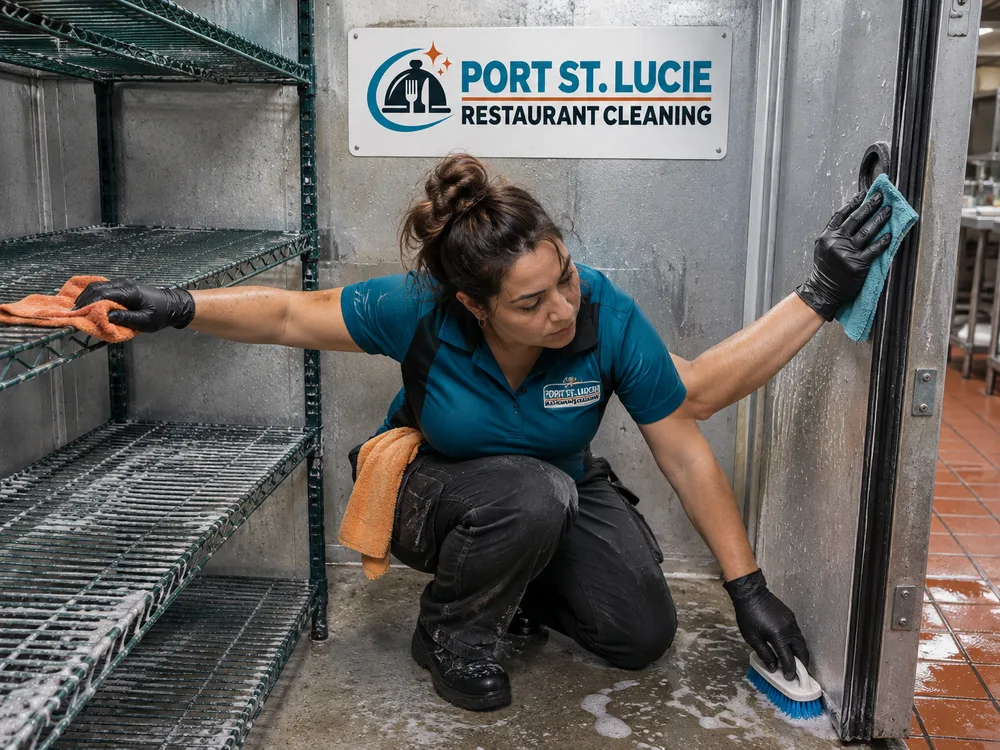
A commercial cleaner hand cleaning empty walk-in cooler shelving, door gaskets, and floor edges while avoiding refrigeration controls

A walk-in cooler should be prepared before cleaning. Food and movable stock need to be removed or relocated under the restaurant's temperature-control procedures. Cardboard, loose labels, and debris should be cleared so shelving and floor edges are accessible. Because refrigeration equipment is sensitive to excess water, crews avoid spraying electrical controls, fans, sensors, and other components that are not approved for direct wet cleaning.

Gaskets and door tracks often need hand cleaning because residue collects in folds and narrow channels. Shelving material also matters. Coated wire, stainless steel, plastic, and aluminum may react differently to strong degreasers or abrasive tools. Visible mold-like growth, damaged insulation, recurring condensation, or an active refrigerant issue should be assessed by the appropriate qualified professional.

High surfaces require their own access plan. Ceiling height, active cooking areas, fragile fixtures, and nearby fire-suppression components affect tool selection. Extension poles, commercial vacuums with suitable filtration, and controlled wiping can limit falling dust. Ladders or lifts must be used only where floor space and operating conditions allow safe placement.

Request a Callback

Scheduling and local coverage

A Scope Built Around the Restaurant

Professional Restaurant Deep Cleaning should fit the operation rather than interrupt it without a plan. A quick-service kitchen with a compact cook line has different access needs than a dining room with upholstered booths or a property with large refrigerated storage. Restaurants near major commercial corridors may also have narrow service windows because deliveries, prep, and late closing duties overlap. The work plan should account for those constraints before equipment is moved or chemicals are opened.

Frequency depends on cooking volume, menu, ventilation, foot traffic, and the effectiveness of daily cleaning. Frying and charbroiling can create heavier airborne grease than low-grease preparation. Open ceilings collect visible dust differently from finished ceilings, while coolers with frequent door traffic may need closer attention at thresholds and gaskets. A recurring plan can rotate demanding areas instead of attempting every detail during one shutdown.

Port St. Lucie Restaurant Cleaning is based on SW South Macedo Boulevard in Port St. Lucie and plans restaurant deep cleaning around actual access and operating needs. Tell us what is falling behind, what must remain untouched, and when the space is available. We will use that information to define a workable scope.

Request a Callback

Arrange a walkthrough to document priority areas, access requirements, preparation duties, and the cleaning window before work is scheduled.

Call for a Free Quote

Common questions

Questions About Restaurant Deep Cleaning in Port St. Lucie

How much does restaurant deep cleaning cost in Port St. Lucie?

Restaurant deep cleaning is usually quoted after a walkthrough because square footage alone does not show the labor involved. Price depends on grease level, number of rooms, equipment access, ceiling height, cooler preparation, floor condition, and whether appliances can be moved safely. Port St. Lucie Restaurant Cleaning provides a defined scope so the quote reflects the requested work and its access requirements.

Can kitchen deep cleaning be completed while the restaurant is closed overnight?

Yes, overnight or off-hour cleaning may be possible when the available window allows enough time for setup, cleaning, drying, inspection, and restaurant reset. The manager must arrange access and confirm that cooking equipment is off and cool. The schedule also needs to account for early deliveries or prep crews that may enter the Port St. Lucie property.

Do we need to remove food before walk-in cooler cleaning?

Yes, exposed food and movable inventory should be removed or relocated according to the restaurant's temperature-control procedures before detailed cooler cleaning. The manager remains responsible for food handling and temperature management. Empty shelves and clear floor edges also allow better access while helping the crew keep cleaning products away from stored ingredients.

Is exhaust hood cleaning included with commercial kitchen deep cleaning?

Exhaust hood, duct, and fan cleaning is not automatically included in general kitchen deep cleaning. That specialized work has separate access, fire-safety, and documentation considerations. A walkthrough can distinguish cleaning of accessible exterior surfaces from work inside the exhaust system so the written scope is clear.

How long do restaurant deep cleaning services take?

A targeted area may be completed in one work window, while a heavily soiled kitchen or multi-area restaurant can require staged visits. Timing depends on buildup, high-access work, equipment cooling, preparation, and drying. The estimated duration is established after inspecting the property and confirming which surfaces are included.

Can high dusting be performed over kitchen equipment and dining areas?

Yes, high dusting can be planned for kitchens and dining rooms when the work zone can be cleared, protected, and safely accessed. Food and clean utensils must be removed or covered, and sensitive fixtures may limit the tools used. Cleaning proceeds from upper surfaces downward, followed by collection of settled debris and floor cleaning.

Do restaurant deep cleaners move heavy appliances?

Heavy appliances are moved only when the scope, equipment design, utility connections, floor condition, and safe handling requirements allow it. A cleaning crew should not casually disconnect gas, electricity, water, fire-suppression, or refrigeration components. The walkthrough establishes what can stay in place and whether a qualified equipment professional is needed.

Can you create a recurring restaurant detailed cleaning plan?

Yes, recurring plans can divide detailed work by area and soil level instead of repeating the same checklist on every visit. A Port St. Lucie restaurant might schedule grease-prone kitchen surfaces more often than high ledges or dining room detail work. The plan can be adjusted as the menu, hours, equipment, or traffic changes.

Start with a defined scope

Plan a More Thorough Restaurant Clean

Describe the kitchen, cooler, dining areas, and high surfaces that need attention. We will help define the preparation, access, and work window required for a clear written scope.