Commercial Kitchens
Accessible counters, sinks, backsplashes, equipment exteriors, shelving, waste areas, and floors can be included. Heavy grease buildup or equipment that requires disassembly is identified separately before work begins.
Serving Port St. Lucie, Florida & surrounding areas
Open 24/7
Restaurant Cleaning • Stuart
Detailed kitchen, dining room, and restroom cleaning built around your operating hours, sanitation priorities, and daily workflow.
Built around your operation
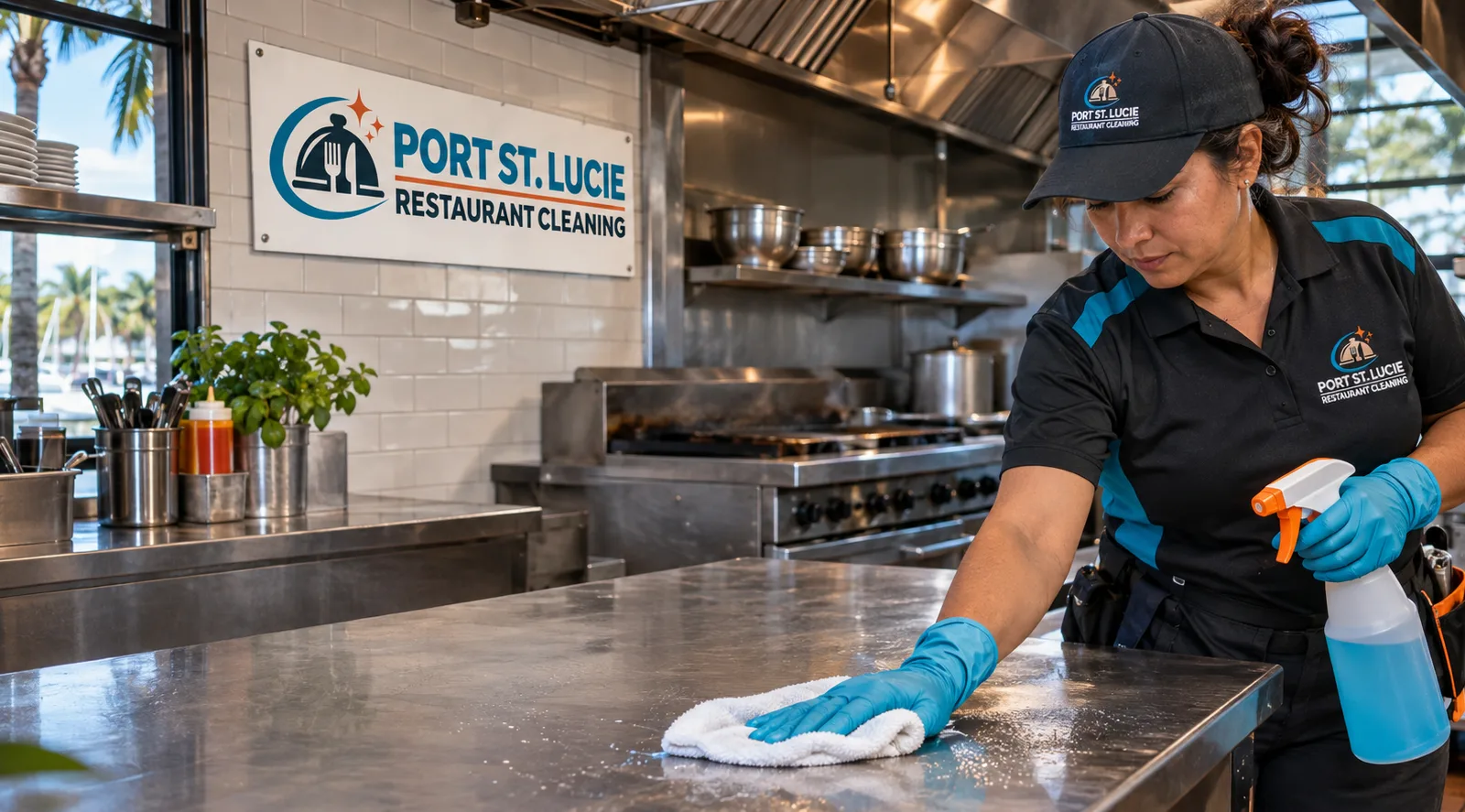
Restaurant Cleaning Stuart should support the way your establishment operates. Port St. Lucie Restaurant Cleaning develops recurring scopes for independent restaurants, cafés, bars, and other food-service businesses in Stuart. Work can be arranged around opening hours, closing duties, deliveries, and kitchen preparation so cleaners do not disrupt staff or guests.
Our team treats the front and back of the house as distinct cleaning zones. Kitchens need grease removal, careful attention around equipment, and sanitation of appropriate surfaces. Dining rooms require consistent floor care and detail work around tables, chairs, ledges, and entrance glass. Restrooms need their own tools, chemicals, and cleaning sequence to reduce cross-contamination.
From our business on SW South Macedo Boulevard, Port St. Lucie's local restaurant service provides nearby Stuart restaurants with practical cleaning plans. Stuart's humid, rainy conditions can bring moisture, grit, and tracked debris through busy entrances. A good scope accounts for those conditions rather than relying on the same checklist throughout the year.
Defined by risk area
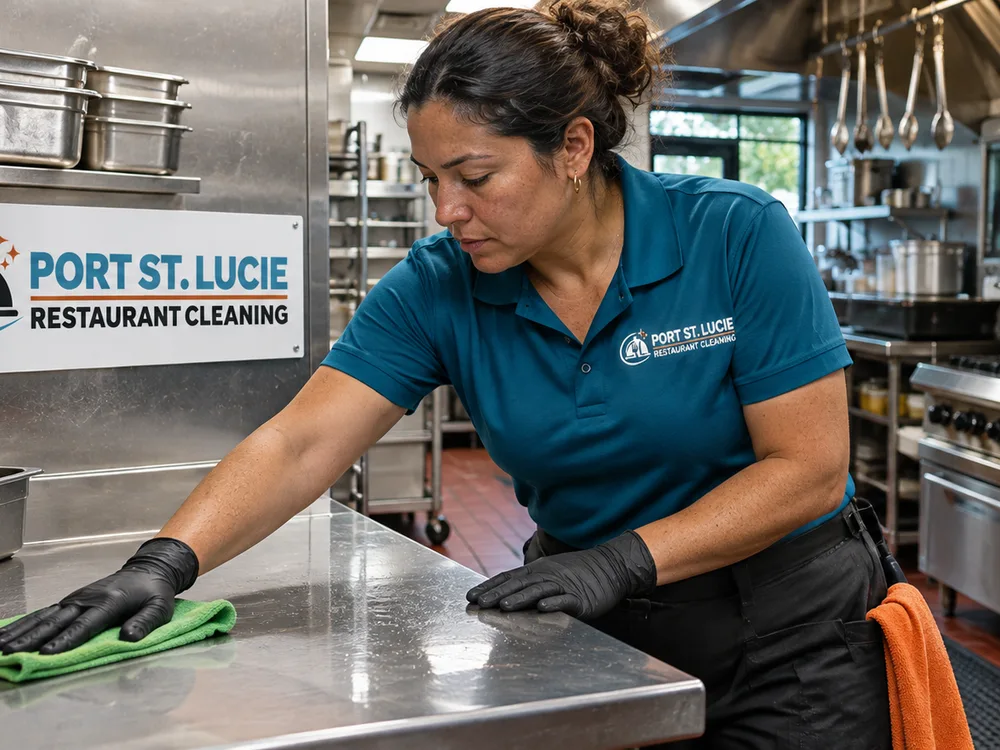
A restaurant is not cleaned like a general office. Food residue, cooking oils, floor grease, and frequent guest contact require defined methods for each area. We begin by identifying the surfaces, equipment exteriors, floor types, service schedule, and tasks already handled by your employees. That prevents duplication and makes responsibility clear.
Kitchen work may include degreasing accessible preparation surfaces, cleaning sinks and splash areas, wiping equipment exteriors, detailing shelving, emptying waste, and scrubbing floors. Cleaners use the correct dwell time for the selected sanitizer or disinfectant. They also follow label directions because a product must remain visibly wet for its stated contact time to work as intended.
Dining-room service can cover floors, baseboards, chair legs, table bases, host areas, windows within reach, and high-touch points. Cleaning and sanitizing are separate steps: soil is removed first, then an appropriate product is applied to the prepared surface. Food-contact surfaces require products and procedures suitable for that use.
Area-by-area scope
Accessible counters, sinks, backsplashes, equipment exteriors, shelving, waste areas, and floors can be included. Heavy grease buildup or equipment that requires disassembly is identified separately before work begins.
Routine service can address hard floors, carpeted areas, table bases, chairs, booths, ledges, entrance glass, and touchpoints. Tasks are matched to the finishes in your restaurant.
Cleaning may include accessible counters, sinks, floor edges, cabinet fronts, mats, and exterior surfaces around beverage stations. Staff storage and open food or drink products are left undisturbed.
Tracked sand and rainwater can quickly affect entrances during South Florida storms. Mats, hard floors, doors, and glass may need added attention during wet periods.
Waste receptacles, surrounding floors, and accessible collection areas can be cleaned as part of the scope. Food residue is removed rather than covered with fragrance.
Baseboards, vents within reach, wall spots, floor edges, and other slower-building soil can be placed on a rotation instead of being added to every visit.
Dedicated restroom workflow
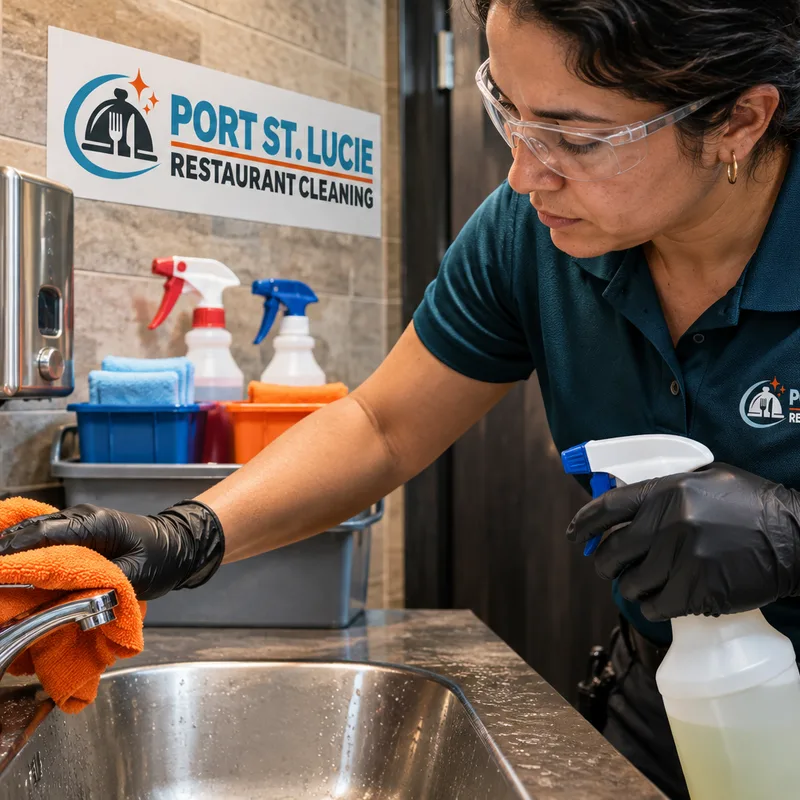
Restaurant Bathroom Cleaning Stuart businesses can rely on starts with separation. Restroom cloths, mop heads, gloves, and other tools should not return to kitchen or dining areas. A color-coded system makes that distinction easier to maintain, while a top-to-bottom workflow keeps cleaned surfaces from being soiled again.
A typical restroom scope covers toilets, urinals where present, sinks, faucets, mirrors, dispensers, partitions, touchpoints, waste receptacles, and floors. Cleaning removes visible soil first. Disinfectant is then applied according to its label, including the required dwell time. Supplies can be checked and replenished when the restaurant provides the paper goods, soap, liners, or other consumables.
Odors often point to residue around fixture bases, grout lines, floor edges, drains, or waste containers. These sources need direct cleaning. Repeatedly adding deodorizer does not remove the cause. During a walkthrough, we can identify recurring trouble spots and set an appropriate frequency for inspection and cleaning.
We review kitchen access, dining surfaces, restroom fixtures, flooring, waste areas, storage limits, alarm or key procedures, and any tasks your closing crew already completes.
Each task is assigned a frequency. Nightly or recurring essentials are separated from weekly and periodic detail work, and exclusions are recorded so managers know what is covered.
Service is planned around closing, opening preparation, deliveries, and staff access. The goal is to provide enough working time without interfering with food preparation or guest service.
The crew follows an ordered route with separate tools for kitchens, dining rooms, and restrooms. Product labels, surface compatibility, and dwell times guide the work.
Managers can report changing needs, seasonal traffic, or recurring issues. The scope can then be adjusted rather than allowing informal requests to replace a clear cleaning plan.
Local scheduling factors
Restaurant traffic and access vary across Stuart. Downtown Stuart establishments may have compact service areas, close neighboring businesses, and limited windows for moving supplies through guest spaces. A planned arrival time and compact equipment setup help crews work within those constraints.
Restaurants near US 1 often depend on visible entrances and steady vehicle traffic. Floors and entrance glass can collect grit, fingerprints, and rain marks quickly, especially during wet weather. Waterfront dining near the St. Lucie River can also bring added moisture and outdoor debris into guest areas. Entry mats, floor edges, and transitions between patios and indoor dining deserve a defined place in the scope.
In Palm City, restaurants serving neighborhood and commuter traffic may experience concentrated meal periods followed by narrow reset windows. Scheduling must leave enough time for floors to dry and cleaned areas to be ready before staff begin the next shift. The right frequency depends on seating volume, operating hours, cooking methods, floor material, restroom use, and the amount of cleaning assigned to restaurant employees.
Choose a defined process
Ask for a written task list that identifies frequency, products, access rules, and exclusions. A vague promise to clean the restaurant does not tell a manager whether floor edges, restroom partitions, equipment exteriors, or periodic detail work are included. The scope should also explain how additions are approved.
Confirm how the team prevents cross-contamination. Dedicated restroom tools, clean cloth management, labeled chemical containers, and zone-based procedures are practical controls. Ask how crews record completed work and how concerns are reported when a manager is not present during service.
It is also worth discussing surface compatibility. Quarry tile, sealed concrete, luxury vinyl, stainless steel, painted walls, and natural stone do not all tolerate the same chemicals or scrubbing methods. A careful provider identifies uncertain finishes before treatment and avoids mixing cleaning chemicals. Restaurant operators remain responsible for their own food-safety plans, employee procedures, pest control, hood and duct service, and regulatory compliance; the cleaning scope should state where those responsibilities begin and end.
Get a written restaurant cleaning scope that matches your hours, surfaces, staff duties, and sanitation priorities before recurring service begins.
Call for a Free QuoteCommon questions
Restaurant cleaning is normally priced after a walkthrough because square footage alone does not show the workload. The estimate depends on visit frequency, kitchen grease levels, restroom count, floor materials, operating hours, access requirements, and whether periodic detail tasks are included. A small dining room with staff-cleaned kitchen equipment has a different scope than a full-service restaurant needing extensive nightly floor and restroom work. The exact price is confirmed in a written proposal after the restaurant is reviewed.
Yes, restaurant cleaning can often be scheduled after closing or during another low-activity window. The timing must allow staff to finish closing duties and give cleaners enough time to work safely before morning preparation begins. Access instructions, keys or alarm procedures, lighting, and lockup responsibility should be documented before the first service.
The right schedule depends on cooking volume, guest traffic, floor type, restroom use, and the duties assigned to employees. Kitchens, restrooms, waste points, and heavily used floors often need attention every operating day, while vents within reach, baseboards, and other detail tasks may follow a rotation. Stuart's rainy conditions can also increase entry-floor and mat maintenance during wet periods.
Restocking can be included when the restaurant supplies the paper products, soap, liners, and other consumables. The written scope should identify which dispensers are checked, where stock is stored, and who reports low inventory. Cleaning typically covers fixtures, mirrors, partitions, touchpoints, receptacles, and floors, with dedicated tools kept separate from kitchen equipment.
Accessible equipment exteriors can be included, but internal mechanical cleaning, disassembly, hood and duct work, and specialized appliance servicing require separate arrangements. During the walkthrough, each appliance should be identified along with shutdown requirements, heat hazards, movable parts, and surfaces that employees must clear before cleaning.
A one-time initial clean may be appropriate when accumulated grease, floor buildup, neglected edges, or restroom scale would prevent routine visits from starting at a maintainable baseline. The initial scope is assessed separately because it may require more labor, stronger soil-removal methods, and extra drying time. Recurring tasks and periodic projects are then listed independently.
The start date depends on walkthrough availability, restaurant access, scope approval, and the requested service schedule. A straightforward recurring plan may be arranged faster than a large initial clean with heavy buildup or restricted overnight access. Managers should allow time to document alarm procedures, chemical storage rules, and employee responsibilities before the first visit.
Start with a defined scope
Tell Port St. Lucie Restaurant Cleaning about your operating hours, priority areas, floor types, and current staff duties. We will review the space and define a practical scope for the kitchen, dining areas, restrooms, and scheduled detail work.