Restaurant Cleaning • Port St. Lucie

Restaurant Cleaning Services in Port St. Lucie

Keep guest-facing spaces and busy work areas consistently clean with a scope built around your hours, surfaces, and daily service demands.

✓Written scope ✓Guest-facing spaces ✓Back-of-house options ✓Schedule-based service
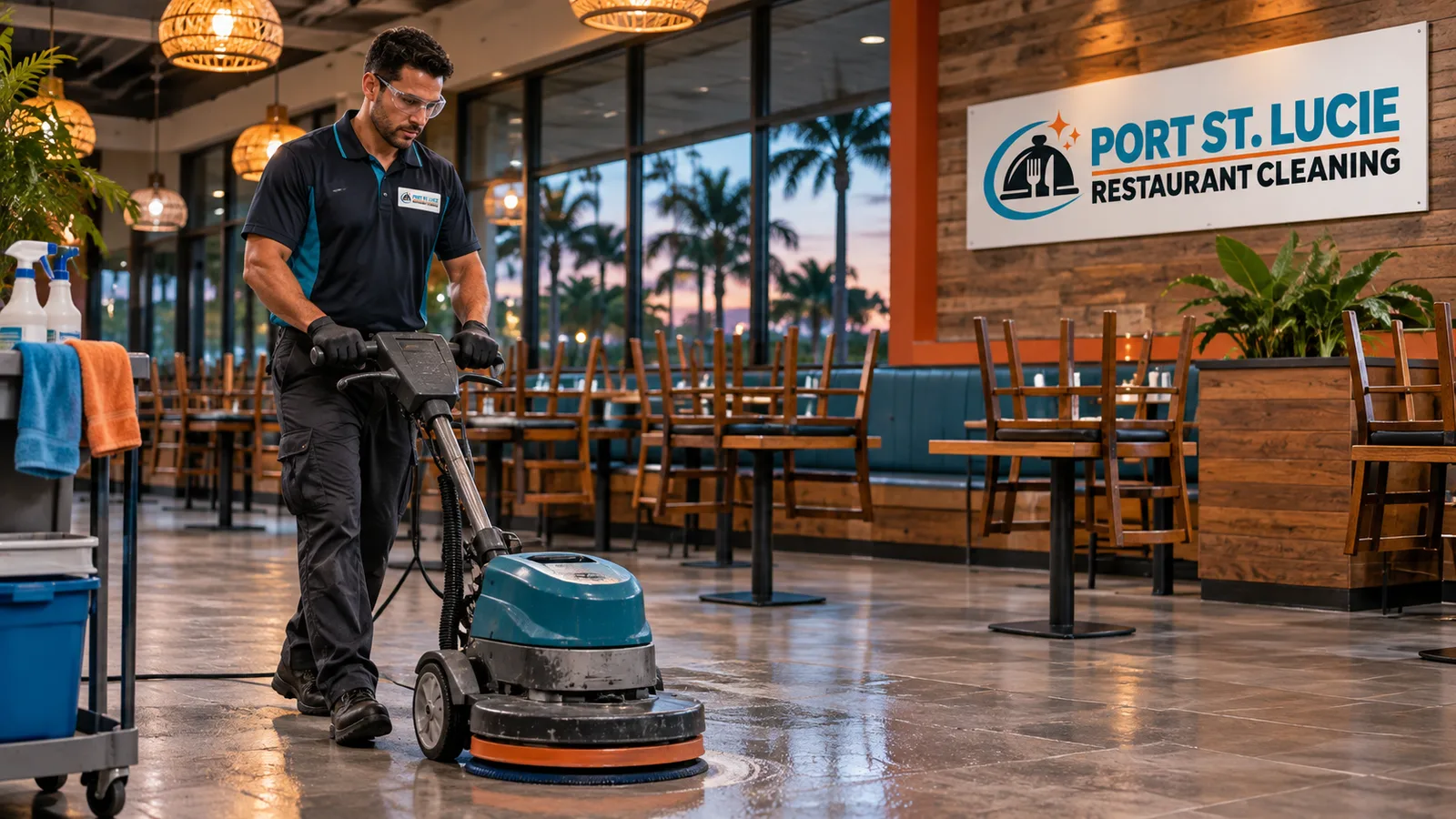
A professional cleaner using commercial floor equipment in a spotless Port St. Lucie restaurant dining room after closing

Built around your operation

A Cleaning Plan Built Around Your Restaurant

Restaurant Cleaning Services should make opening easier, protect the appearance of your dining room, and address the grease and soil that build up during service. Port St. Lucie Restaurant Cleaning develops practical scopes for dining areas, bars, restrooms, floors, and selected back-of-house spaces. Work can be arranged around opening, closing, and prep periods so cleaners do not interfere with guests or kitchen production.

Before recommending tasks and frequency, an experienced restaurant team in Port St. Lucie looks at how each area is actually used. A quick-service dining room near a busy commercial corridor has different floor and restroom demands than a reservation-based dining room with longer table turns. Restaurants near outdoor seating and high-traffic entrances may also need closer attention to tracked-in sand, moisture, glass, and entry mats, especially during Florida's rainy season.

The scope should identify surfaces, cleaning methods, frequencies, access instructions, and any areas that remain the restaurant's responsibility. That written plan gives managers a clear standard for routine checks and helps prevent important tasks from being lost between shifts.

Request a Callback

Included work and critical surfaces

Restaurant Cleaning Services for Guest and Work Areas

Front Of House Cleaning

Restaurant front of house cleaning in Port St. Lucie can cover entry glass, host stands, ledges, booths, chairs, partitions, door touchpoints, and other guest-visible surfaces. Cleaning is planned around the materials present so wood, upholstery, metal, and finished surfaces receive suitable products.

Restaurant Dining Room Cleaning

Dining area cleaning addresses tables, chair legs, booth bases, windowsills, partitions, crumbs at perimeter edges, and soil beneath movable furniture. The goal is a dining room that is ready for the next service, including the details guests can see in daylight.

Restaurant Bar Cleaning

Bar cleaning may include the guest-facing counter, stools, foot rails, exterior cabinetry, shelving, mirrors, glass partitions, and accessible floor areas. Food-contact tools, beverage equipment internals, taps, and inventory remain outside the scope unless specifically reviewed and approved.

Restaurant Restroom Cleaning

Restaurant restroom cleaning in Port St. Lucie can include toilets, urinals, partitions, sinks, mirrors, dispensers, touchpoints, floors, and odor-source removal. Supplies and refill responsibilities should be documented so managers know who provides and stocks consumables.

Restaurant Floor Cleaning

Floor care is matched to the surface and soil load. Common tasks include vacuuming, dust mopping, wet mopping, edge cleaning, spot treatment, and periodic machine scrubbing where the flooring and access allow it.

High Dusting

High dusting targets accessible vents, ledges, pipes, light housings, signs, and other elevated surfaces that collect visible dust. Height, access, nearby equipment, and overhead hazards are reviewed before the work is scheduled.

Request a Callback

Clear operational boundaries

Restaurant Back Of House Cleaning in Port St. Lucie

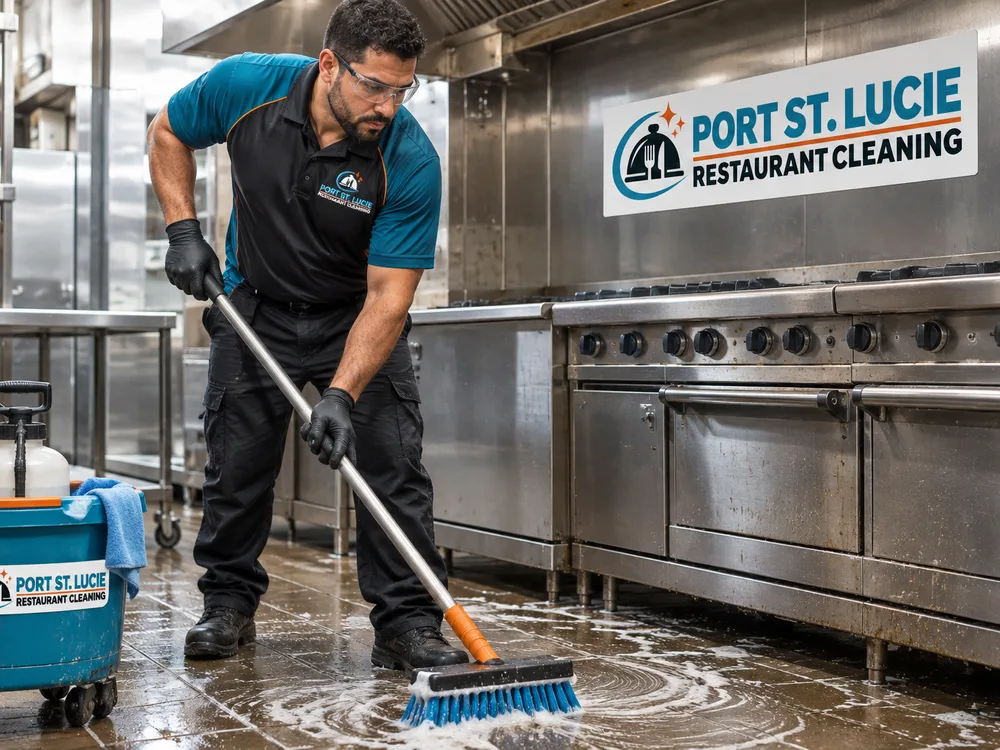
A trained restaurant cleaner degreasing an accessible commercial kitchen floor beside stainless steel equipment with food and utensils removed
Back-of-house work starts with clear boundaries, safe access, and products suited to each surface.

Back-of-house cleaning requires a defined boundary because kitchens contain heat, grease, food-contact surfaces, sharp tools, chemicals, and powered equipment. A routine scope may cover accessible floors, baseboards, walls, doors, exterior equipment surfaces, employee areas, and selected prep-zone surfaces after the restaurant has removed food, utensils, and loose items.

Degreaser selection, dwell time, agitation, and rinsing must suit the surface. Too much chemical can leave residue, while the wrong product can damage aluminum, finished flooring, grout, or stainless steel. Safety Data Sheets should be available for commercial chemicals, and products must never be mixed unless the manufacturer specifically permits it.

Exhaust hood systems, ducts, fans, grease traps, pest control, and internal appliance servicing are specialist work and should be handled under separate scopes by qualified providers. Keeping those boundaries clear prevents a routine janitorial visit from being mistaken for technical kitchen maintenance.
Request a Callback

Surface-aware floor care

Floor Care That Fits the Surface and Service Pattern

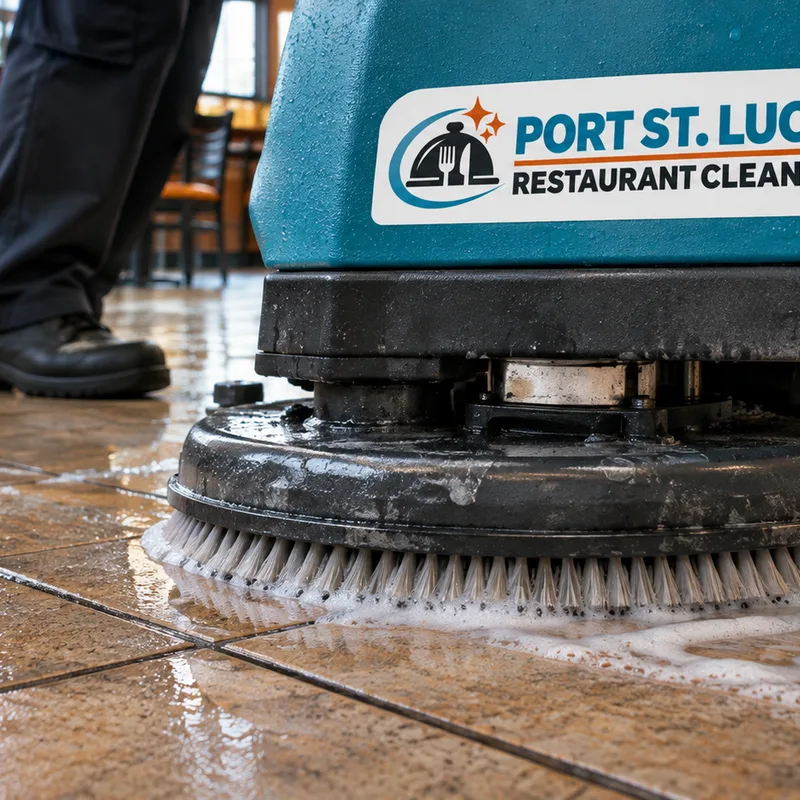
Close view of a commercial floor scrubber cleaning restaurant tile with edges and grout lines visible for detailed inspection
Correct chemistry and soil removal matter more than fragrance or shine.

Restaurant floor cleaning begins with soil removal. Loose grit should be vacuumed or dust-mopped before wet cleaning because grit can scratch finishes and turn mop water into abrasive slurry. Corners, grout lines, under-table areas, bar rails, and transitions need direct attention; a fast pass through the center of a room will not remove compacted edge soil.

Luxury vinyl tile, ceramic tile, quarry tile, sealed concrete, and carpet all require different methods. Neutral cleaner is often appropriate for finished floors, while grease-loaded kitchen tile may require a compatible alkaline degreaser followed by proper recovery and rinsing. Carpeted dining areas may need vacuuming, spot treatment, and periodic extraction scheduled with enough drying time before reopening.

Florida rain can bring wet footprints and tracked debris through restaurant entrances. Entry mats should lie flat, and hard floors must be left clean, dry, and free of slippery residue before employees or guests return. Any damaged flooring, loose transitions, or persistent slick areas should be reported to management rather than hidden with extra chemical.

Request a Callback

Controlled service setup

How We Set Up Your Cleaning Service

Request a Callback
01

Walk the Restaurant

We review the dining room, bar, restrooms, kitchen access, employee spaces, floors, elevated surfaces, entrances, and storage limits. Managers can identify recurring trouble spots, restricted equipment, security procedures, and areas that must be completed before a certain shift.

02

Write the Scope

The proposal lists tasks and frequencies rather than relying on broad terms such as general cleaning. Nightly needs can be separated from weekly detail work, periodic high dusting, machine floor care, and requested deep-clean projects.

03

Confirm Access and Safety

We establish arrival windows, alarm or key procedures, chemical storage, water access, waste handling, and shutdown requirements. Back-of-house work is scheduled only when surfaces are cool and the restaurant has made the area safe to enter.

04

Begin Service and Inspect

The agreed work is completed in a consistent order, followed by inspection of priority areas. Managers have a clear way to report concerns, access changes, unusual spills, or additional work that falls outside the regular scope.

05

Adjust as Operations Change

Seasonal traffic, menu changes, special events, outdoor seating, and revised operating hours can alter cleaning needs. The scope can be reviewed when conditions change instead of allowing outdated tasks or timing to continue.

Clear standards and communication

What Reliable Restaurant Cleaning Looks Like

A reliable program is specific enough to inspect. It states whether cleaners move lightweight chairs, clean beneath booths where accessible, wipe chair legs, detail restroom partitions, service entry glass, or perform high dusting. It also states what is excluded. Clear expectations matter because restaurant layouts and closing procedures vary.

Clean tools should be separated by use area to reduce cross-contamination. Restroom cloths and mops should not move into dining or food-preparation spaces. Microfiber should be changed when soiled, mop solution should be replaced rather than stretched through multiple dirty areas, and chemicals should be labeled and used according to manufacturer directions. Food-contact surfaces require an approved process and the correct sanitizer concentration when sanitizing is part of the agreed work.

Port St. Lucie restaurants along major corridors such as U.S. Route 1 and Port St. Lucie Boulevard can experience fast changes in traffic around meal periods. Scheduling should account for the real closing routine, including late tables, staff cleanup, deliveries, and alarm deadlines. A practical plan gives the restaurant enough time to complete its own shutdown before professional cleaning begins.

Request a Callback

A detailed walkthrough can turn recurring cleaning concerns into a written task list, realistic schedule, and clear division of responsibility.

Call for a Free Quote

Common questions

Questions Restaurant Managers Ask Before Scheduling Service

How much do Restaurant Cleaning Services cost in Port St. Lucie?

Restaurant cleaning is usually priced after a walkthrough because square footage alone does not show the full workload. Operating hours, visit frequency, floor materials, restroom count, grease buildup, furniture density, access, and the division between staff duties and contracted work all affect the price. A written proposal should separate recurring service from periodic floor care, high dusting, and one-time deep cleaning.

Can cleaning be completed after the restaurant closes?

Yes, after-hours cleaning can be arranged when access, alarm procedures, lighting, and a realistic closing window are established. Port St. Lucie Restaurant Cleaning coordinates timing around the restaurant's operating schedule, but employees must finish shutdown duties and make restricted work areas safe before cleaners enter.

How often should Restaurant Floor Cleaning be scheduled?

Guest-area floors commonly need routine attention after service, while machine scrubbing, carpet extraction, grout work, and other restorative tasks are scheduled according to soil load and floor condition. Port St. Lucie's rain can increase moisture and debris at entrances, so entry zones may require added attention even when interior traffic is unchanged.

Do you clean commercial kitchen equipment and exhaust hoods?

Routine back-of-house service may include approved exterior equipment surfaces, but internal appliances and complete exhaust hood systems require separate specialist work. The walkthrough identifies restricted equipment, hot surfaces, electrical risks, food-contact areas, and any task that needs a qualified vendor rather than a janitorial cleaner.

Can you provide Restaurant Front Of House Cleaning without kitchen service?

Yes, a scope can focus on the dining room, bar, entry, guest restrooms, and front-of-house floors. This arrangement can work when kitchen employees already follow an established closing checklist and management needs outside help with guest-facing spaces.

What should restaurant staff do before the cleaning team arrives?

Staff should secure food, remove personal items and loose utensils, finish required equipment shutdowns, identify hot or restricted surfaces, and provide safe access to scheduled areas. Chairs or floor obstacles should be handled according to the written plan, and unusual spills or broken glass should be reported before work begins.

Is high dusting part of every recurring visit?

High dusting is usually scheduled at an agreed interval rather than included in every routine visit. Ceiling height, ladder access, exposed utilities, light fixtures, vents, and activity beneath the work area determine whether it can be completed safely and whether portions need to occur during a separate service window.

Start with a defined scope

Build a Cleaner, More Consistent Closing Routine

Tell Port St. Lucie Restaurant Cleaning about your layout, operating hours, floor types, and recurring problem areas. We will help define a practical scope for the spaces your guests and staff use every day.