Cook Lines
Degreasing for accessible range, griddle, fryer and oven exteriors, plus nearby backsplash panels and washable surfaces. Equipment is cooled and handled according to the agreed work plan.
Serving Port St. Lucie, Florida & surrounding areas
Open 24/7
Kitchen Cleaning • Port St. Lucie
Detailed cleaning for restaurant cook lines, equipment, floors, walls and food-preparation areas, scheduled around your operating hours.
Built around your operation
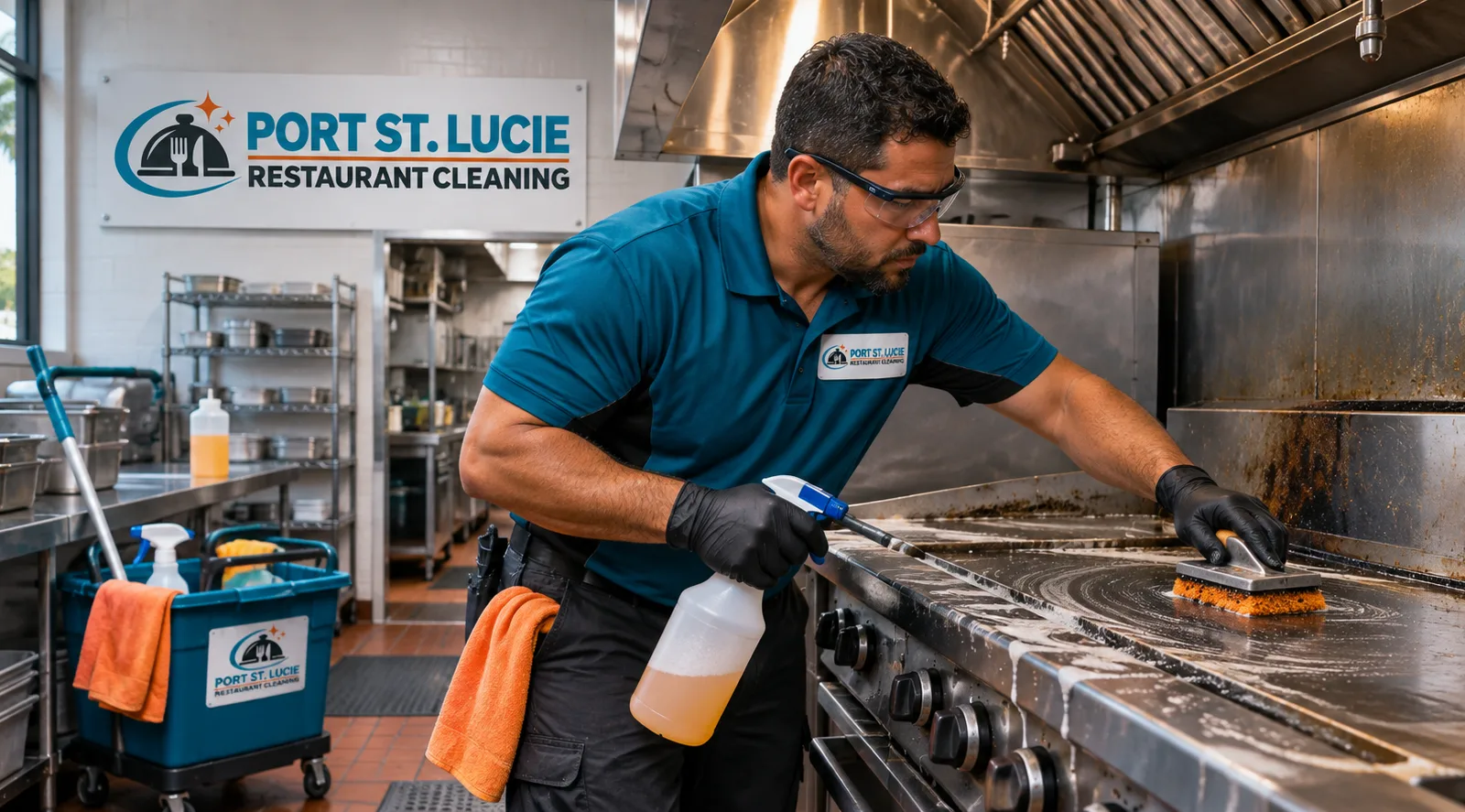
Kitchen Cleaning Services should address the grease, food residue and soil that routine closing duties cannot fully remove. Port St. Lucie Restaurant Cleaning develops a written scope around your layout, equipment and operating schedule. The work may cover cooking surfaces, equipment exteriors, accessible areas behind and beneath movable units, walls, floors, drains, shelving and food-preparation zones.
As restaurant specialists serving Port St. Lucie, we plan the work around how commercial kitchens actually operate. A quick-service cook line may need frequent degreasing at fryers and nearby surfaces, while a full-service restaurant may require a broader rotation covering prep areas, storage zones and equipment details. Humid South Florida conditions also make prompt drying and careful attention to floor edges, drains and low-airflow spaces practical priorities.
Our location on SW South Macedo Boulevard places the team near major routes serving restaurant operators across Port St. Lucie. Scope comes first: we identify what is included, what must remain untouched and which equipment needs to cool or be moved before cleaning starts.
Included work and critical surfaces
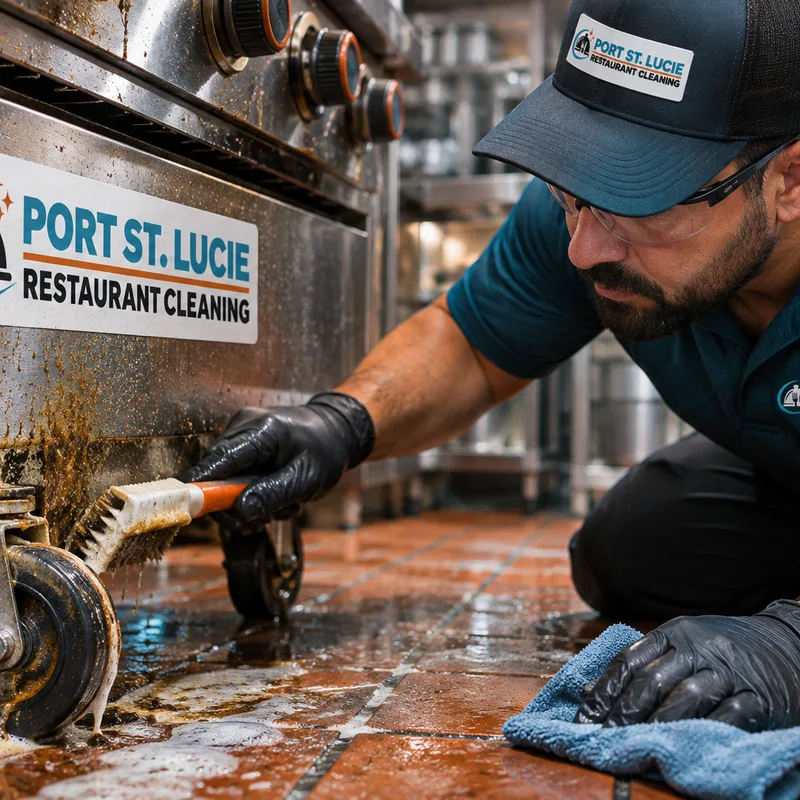
A commercial kitchen has several soil types, and each calls for the right method. Cooking fats often need an appropriate degreaser and dwell time before agitation. Carbonized residue may require targeted scraping with tools suited to the surface. Food debris must be removed before washing, rinsing and, where included, sanitizing food-contact surfaces with an approved product used according to its label.
Typical scope items include cook-line surfaces, fryer and range exteriors, backsplash panels, stainless steel tables, sinks, shelving, floor mats, walls, base edges and washable doors. Low-level Kitchen Equipment Cleaning can include casters, legs, sides and accessible spaces beneath appliances. Interior cleaning of ovens, fryers or other units is handled only when listed in the agreed scope and when manufacturer instructions permit it.
Exhaust hoods, ducts and rooftop fans are specialized fire-safety systems. If exhaust-system work is needed, it should be identified separately rather than assumed to be part of general kitchen cleaning. The same applies to pest treatment, plumbing repairs and equipment servicing.
Area-by-area scope
Degreasing for accessible range, griddle, fryer and oven exteriors, plus nearby backsplash panels and washable surfaces. Equipment is cooled and handled according to the agreed work plan.
Cleaning for stainless steel worktables, sinks, shelving and other specified prep-zone surfaces. Food, utensils and loose supplies must be removed or protected before work begins.
Soil removal at floor mats, corners, wall edges, equipment legs and accessible spaces beneath movable units. The method is selected for the floor material and slip risk.
Cleaning for washable walls, doors, handles, switches and other listed touchpoints where grease films and fingerprints build up during service.
Targeted care for stainless steel exteriors, control-area surrounds, casters and sides. Sensitive electrical components and manufacturer-restricted areas are protected.
Dishwashing zones, accessible drain surrounds, shelving and selected storage-area surfaces can be incorporated when they are included in the written scope.
We review the cook line, prep space, dish area, floors and access constraints. We also discuss service hours, shutdown timing, equipment that can be moved and surfaces requiring special care.
The plan lists included areas, exclusions and preparation responsibilities. It also distinguishes general cleaning from appliance interiors, exhaust cleaning, repairs or other specialized work.
Food and loose items are cleared or protected, equipment is allowed to cool and the work zone is arranged to reduce cross-contamination. Product labels and surface compatibility guide chemical use.
Work generally proceeds from higher surfaces toward lower ones and from less soiled zones toward heavier grease areas. Crews remove debris, apply the appropriate cleaner, allow dwell time, agitate, rinse as required and dry the area.
The agreed work areas are checked before turnover. Recurring clients can adjust the rotation as grease patterns, menus, equipment or operating schedules change.
Scheduling and access
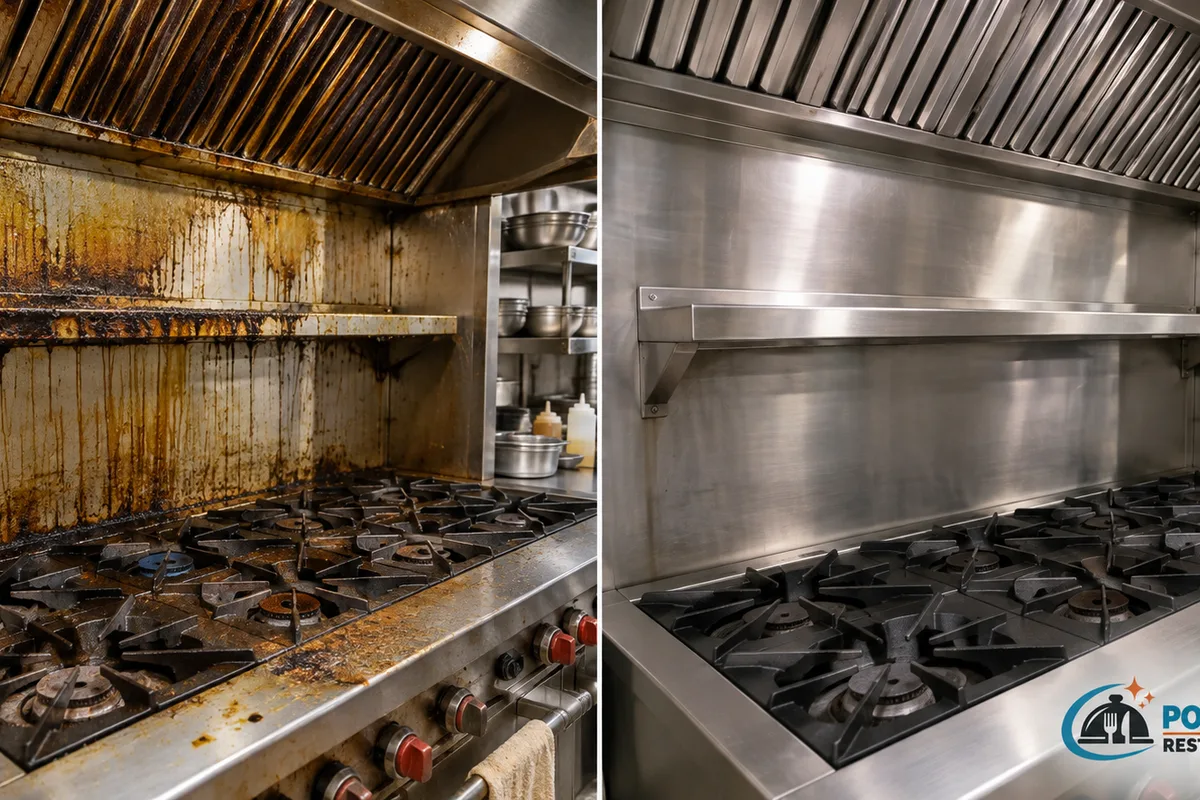
Commercial Kitchen Deep Cleaning is usually scheduled when the cooking line is shut down and hot equipment has had time to cool. Before the appointment, staff may need to remove food, smallwares and personal items from the work zone. Any gas or electrical disconnection should be handled only by a qualified person when required; cleaners should not improvise utility work to gain access.
The depth and frequency depend on cooking volume, menu and equipment arrangement. Frying and high-heat cooking can spread grease beyond the appliance itself, while tightly spaced equipment can hide residue along sides, casters and wall edges. A sensible plan separates daily staff duties from periodic professional cleaning. High-use cook-line surfaces may need more frequent attention than dry storage shelving or low-soil support areas.
For operators near Interstate 95 or Florida's Turnpike, after-hours access and staff departure times can affect scheduling more than travel distance alone. A clear arrival window, access instructions and an agreed reopening deadline help the crew build a realistic work plan.
Surface-aware methods
Professional Kitchen Cleaning is not a matter of using the strongest chemical available. Product choice depends on the soil and the surface. Stainless steel, painted walls, quarry tile, resilient flooring, aluminum and appliance controls can react differently to cleaners, abrasives and moisture. Spot testing and manufacturer guidance reduce the risk of staining, corrosion or finish damage.
Food-contact surfaces require particular care. Cleaning removes food and soil; sanitizing is a separate step performed after cleaning when it is included in the scope. Sanitizer concentration, contact time and rinsing requirements must follow the product label. Chemicals should never be mixed, and Safety Data Sheets should be available for workplace products.
Commercial kitchen cleaning also supports an operator's own food-safety and maintenance routines, but it does not replace management checks or regulatory obligations. Restaurants in Port St. Lucie should keep their cleaning schedules and records aligned with the requirements that apply to their establishment. Our work concentrates on the physical cleaning tasks listed in the service plan.
A walkthrough can turn a vague request into a clear cleaning scope, practical schedule and list of preparation steps for your staff.
Call for a Free QuoteCommon questions
Pricing depends on kitchen size, grease level, equipment access, requested tasks and the time available for the work. A light recurring service for open surfaces differs substantially from a first-time deep cleaning that requires detailed work around a full cook line. After-hours access, movable equipment and appliance interiors can also affect labor. A walkthrough is the best way to establish a written, operation-specific price.
The time is set by the scope, kitchen condition and number of work areas available at once. A targeted cook-line service may fit within one shutdown period, while a larger deep cleaning may need a longer window or staged visits. Port St. Lucie operators should allow time for hot appliances to cool and cleaned surfaces to dry before food preparation resumes.
Yes, commercial kitchen cleaning can often be arranged around closing hours when access, alarms and reopening deadlines are confirmed in advance. Staff should remove exposed food and loose smallwares before the crew arrives. Equipment must be cool enough to clean safely, and a responsible contact should be available for access or scope questions.
Equipment cleaning is included only to the extent listed in the written scope. Exterior panels, legs, casters, sides and accessible areas beneath units are common options. Interiors, removable components and spaces requiring gas or electrical disconnection need prior review. Manufacturer restrictions and the condition of each appliance determine which methods are suitable.
General kitchen cleaning should not be assumed to include the full exhaust system. Hood interiors, ductwork and rooftop exhaust fans involve specialized access and fire-safety requirements, so those items must be identified separately. Cleaning the accessible exterior of a hood canopy or nearby backsplash is a different task and can be included when specified.
The right interval depends on cooking volume, grease production, menu, equipment layout and the restaurant's daily cleaning program. High-use fryer and range areas commonly need attention sooner than low-soil storage zones. A Port St. Lucie restaurant can use an initial walkthrough to divide tasks into daily staff duties and recurring professional rotations.
Staff should remove or securely protect food, clear smallwares, identify sensitive equipment and provide access to every included area. Cooking appliances need adequate cooling time. Access codes, alarm instructions, water availability and the required completion time should be confirmed before an after-hours visit.
Yes, the scope should match the operation rather than rely on a standard checklist. A café may prioritize prep counters, ovens and floors, while a high-volume kitchen may require rotating work around fryers, ranges, equipment sides and grease-prone walls. Service frequency can also vary by zone within the same kitchen.
Start with a defined scope
Tell Port St. Lucie Restaurant Cleaning about your kitchen layout, operating hours and problem areas. We will help define a practical scope and schedule before work begins.